This article introduces the working principle of nasal COVID-19 rapid antigen tests, explains the role of sample collection and test components, and reviews important factors to consider when evaluating a self-test. It also covers packaging, instructions, storage, quality documentation, and common questions from buyers. The goal is to help readers make informed product decisions without treating any rapid test as a substitute for professional medical advice.
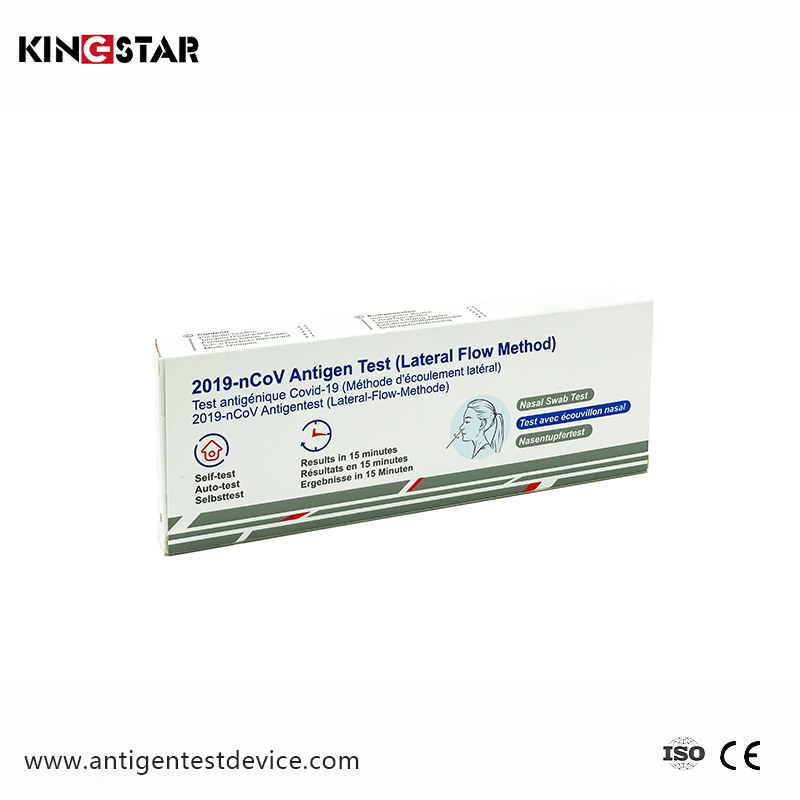
1. Understanding Nasal Rapid Antigen Tests
COVID-19 rapid antigen tests are in vitro diagnostic products intended to identify particular proteins associated with the SARS-CoV-2 virus. Many self-test formats use a nasal swab to collect a specimen from the inside of the nose. The collected sample is then processed with the supplied extraction solution and applied to a test device.
Unlike laboratory molecular methods, which detect viral genetic material, antigen tests look for viral proteins. This difference affects how the tests are used and how results should be interpreted. Rapid antigen tests are generally designed to provide a result quickly, but their ability to detect infection can vary according to the amount of viral antigen in the sample, the stage of infection, specimen quality, and the characteristics of the specific product.
A self-test is intended to be used by an individual according to its approved or authorized instructions. It should not be assumed that every nasal swab kit is suitable for every age group, setting, or testing purpose. Always check the intended-use statement on the packaging.
2. How the Test Works
Most rapid antigen devices use an immunochromatographic assay. In simple terms, the test contains materials designed to react with a target viral antigen. When a properly collected and prepared sample is added to the sample well, liquid moves along the test strip through capillary action.
Sample movement and antigen recognition
If the target antigen is present at a detectable level, it may bind with labeled antibodies or other specific detection reagents in the test. The resulting complexes move along the membrane and may be captured in the test region, producing a visible line or another signal described in the instructions.
Control and test indicators
Many lateral-flow devices include a control indicator and a test indicator. The control indicator helps show whether the liquid has migrated through the device as expected. The test indicator is associated with detection of the target antigen. The exact line pattern and interpretation rules depend on the specific product.
3. Main Components of a Self-Test Kit
A complete self-test kit may contain several coordinated components. Each item has a specific purpose, and users should check that the package contains all required materials before starting.
| Component | Typical purpose | What users should check |
|---|---|---|
| Test cassette or device | Contains the test strip and result-reading area | Packaging integrity, expiry date, and visible damage |
| Nasal swab | Collects a specimen from the instructed nasal area | Correct swab type and undamaged sterile packaging, where applicable |
| Extraction buffer | Helps prepare the collected sample for testing | Correct supplied solution and intact container |
| Extraction tube | Holds the buffer and sample during preparation | Clean, undamaged tube and correct accessories |
| Nozzle or dropper cap | Allows controlled application of the prepared sample | Compatibility with the supplied tube and device |
| Instructions for use | Explains collection, testing, timing, and result interpretation | Clear language, diagrams, and product-specific directions |
Kit configurations can differ. Some products combine accessories or use a different extraction system. Buyers should confirm the actual contents with the supplier rather than assuming that all rapid antigen kits have identical components.
4. What Influences Test Performance?
Test performance is not determined by the cassette alone. The quality of the specimen, the timing of testing, and correct use all matter. Understanding these factors helps users avoid unrealistic expectations.
Specimen collection
A nasal swab must be collected from the area and in the manner described in the instructions. Insufficient contact, incorrect swabbing technique, or use of an unsuitable swab may affect the amount of specimen collected. Users should never improvise a different collection method.
Timing in relation to infection
The amount of detectable antigen can change over the course of an infection. A test taken too early or at a time when antigen levels are below the product's detection capability may produce a negative result even when infection is present.
Following the exact procedure
Using the wrong number of drops, skipping a preparation step, reading the result too early, or waiting beyond the specified reading window can make interpretation unreliable. The supplied instructions are part of the test system, not optional background information.
Product-specific performance information
Performance claims should be supported by appropriate validation data and documentation for the exact product. Buyers should distinguish between analytical performance, clinical performance, and claims made in general promotional material.
5. Practical Benefits of At-Home Testing
When an appropriate product is available and used correctly, a nasal rapid antigen self-test can provide several practical advantages.
- Convenient access: Testing can be performed in a suitable private setting without necessarily visiting a laboratory.
- Short turnaround: Many rapid tests are designed to provide a result within a relatively short period, as specified by the manufacturer.
- Simple workflow: A well-designed kit organizes the required accessories and instructions in one package.
- Flexible use: Depending on local authorization and the product's intended use, self-tests may support testing at home or in other permitted settings.
- Useful first-step information: Results may help users decide whether to take additional precautions or seek further guidance.
These benefits should not be confused with a guarantee of diagnosis. A rapid antigen result is one piece of information and must be considered alongside symptoms, exposure history, and relevant public health guidance.
6. How to Evaluate a Suitable Product
For consumers, distributors, and institutional buyers, product selection should begin with intended use and regulatory suitability. A low price or attractive package design is not enough to establish product quality.
Check the intended user and specimen type
Confirm whether the product is intended for self-testing, professional use, or another setting. Check the permitted specimen type and age range. Do not assume that a product designed for professional collection is automatically suitable for unsupervised home use.
Review the instructions
Instructions should clearly explain specimen collection, sample preparation, the number of drops to apply, the required waiting period, and how to interpret valid, positive, negative, and invalid results. Clear illustrations can make a multi-step procedure easier to follow.
Review performance evidence
Ask for product-specific performance documentation. Relevant information may include the study design, sample population, comparator method, and reported sensitivity and specificity. Results from one product should not be transferred to another product simply because both use a similar cassette format.
Confirm regulatory status
Medical device and in vitro diagnostic requirements differ by country and market. Buyers should verify the product's applicable registration, authorization, listing, or conformity documentation for the destination market. A certificate or registration from one jurisdiction does not automatically establish permission to sell in another.
| Evaluation area | Questions to ask |
|---|---|
| Intended use | Is it specifically intended for self-testing, and who may use it? |
| Performance | Are product-specific validation results available? |
| Documentation | Are instructions, labels, and technical documents complete? |
| Packaging | Are the kit contents, lot number, and expiry date clearly identified? |
| Regulatory compliance | Does the product meet requirements in the intended destination market? |
| Supply capability | Can the supplier explain lead time, packaging options, and quality controls? |
7. Storage and Handling Considerations
Rapid antigen tests contain biological and chemical materials that may be affected by unsuitable storage conditions. Follow the temperature range, humidity guidance, and other storage requirements stated by the manufacturer. Avoid leaving kits in vehicles, direct sunlight, or other environments where temperatures may exceed the specified limits.
Before use, inspect the outer packaging and individual components. Do not use a kit if its seal is broken, a component is missing, the test device is visibly damaged, or the expiry date has passed. If the package has been stored outside the specified conditions, contact the supplier or manufacturer for guidance rather than assuming the kit remains suitable.
For distributors and bulk purchasers, storage records and inventory rotation can help reduce the risk of expired stock. A first-expiry-first-out approach is a practical way to manage inventory when multiple production lots are held.
8. Understanding Test Limitations
No rapid antigen self-test should be described as perfect. A negative result does not always exclude COVID-19, particularly when testing occurs early in infection, the specimen is not collected correctly, or the amount of antigen is below the detection capability of the test.
A positive result may indicate the presence of the target antigen, but users should follow local health guidance about confirmation, isolation or other precautions, and clinical assessment. False-positive and false-negative results are possible. The meaning of a result may also depend on the user's symptoms, exposure history, and the prevalence of infection in the community.
9. Questions Buyers Should Ask Suppliers
Before placing an order, buyers should request clear answers to practical and technical questions. This is especially important when sourcing products for distribution, workplace programs, or institutional procurement.
- What is the product's exact intended use and specimen type?
- Is it authorized or registered for the destination market?
- Can the supplier provide the current instructions for use and product label?
- Are performance evaluation documents available for the exact model?
- What are the storage conditions and shelf-life requirements?
- How are production lots identified and traceable?
- What packaging formats and language options are available?
- What quality-control procedures are used during manufacturing and release?
Reliable answers should be specific and supported by documents where appropriate. Buyers should be cautious about unsupported claims such as guaranteed accuracy, universal compatibility, or suitability for every age group.
10. Frequently Asked Questions
Q1. What does a nasal COVID-19 rapid antigen test detect?
It is designed to detect specific proteins, known as antigens, associated with SARS-CoV-2 in a collected nasal specimen. It does not directly detect viral genetic material.
Q2. How quickly does a self-test provide a result?
The result time varies by product. Users should follow the exact waiting period printed in the instructions and should not interpret the device outside the stated reading window.
Q3. Does a negative result mean that I definitely do not have COVID-19?
No. A negative result does not completely rule out infection. If symptoms or exposure concerns remain, follow local guidance on repeat testing and seek medical advice when appropriate.
Q4. Can every rapid antigen test be used at home?
No. Some products are intended for professional use only. Check the product's intended-use statement and local regulatory requirements before use or distribution.
Q5. Why is the control line important?
On many devices, the control indicator helps show that the test has functioned as expected. If the required control indicator does not appear, the result is generally invalid under the product's instructions.
Q6. Can an expired test still be used?
Do not use an expired kit unless the manufacturer and relevant regulatory authority have explicitly provided applicable instructions or an extension. Follow the expiry information on the package.
Q7. What should distributors check before importing test kits?
They should confirm destination-market regulatory requirements, labeling and language rules, product documentation, storage conditions, shelf life, traceability, and the supplier's quality management arrangements.
About KINGSTAR INC
KINGSTAR INC understands that buyers of rapid diagnostic products need more than a product description. Clear technical information, consistent documentation, appropriate packaging, and responsive communication all contribute to a more informed sourcing process.
When evaluating a nasal swab COVID-19 self-test rapid antigen test, customers should consider the product's intended use, supporting performance evidence, applicable regulatory status, and supply requirements. Product specifications and available documentation should always be confirmed for the exact model and destination market.
Discuss Your Rapid Antigen Test Requirements
Looking for product information, technical documentation, or supply details for a nasal swab COVID-19 self-test rapid antigen test? Contact KINGSTAR INC to discuss your requirements and request the relevant product information.
For product specifications, packaging details, and business inquiries, contact us to start a conversation with our team.