
Which SPO2 Fingertip Pulse Oximeter Blood Oxygen Monitor Meets Your Needs?
Choosing a reliable SPO2 Fingertip Pulse Oximeter Blood Oxygen Monitor is an important decision for medical equipment distributors, healthcare product suppliers, and professional buyers. As demand for convenient oxygen saturation monitoring continues to grow, buyers need to evaluate more than the appearance and price of a device. Measurement performance, display readability, sensor technology, user comfort, manufacturing quality, and product compliance all deserve attention.
This guide explains how fingertip pulse oximeters work, which specifications matter most, what common purchasing mistakes to avoid, and how to evaluate a suitable supplier for long-term business cooperation.
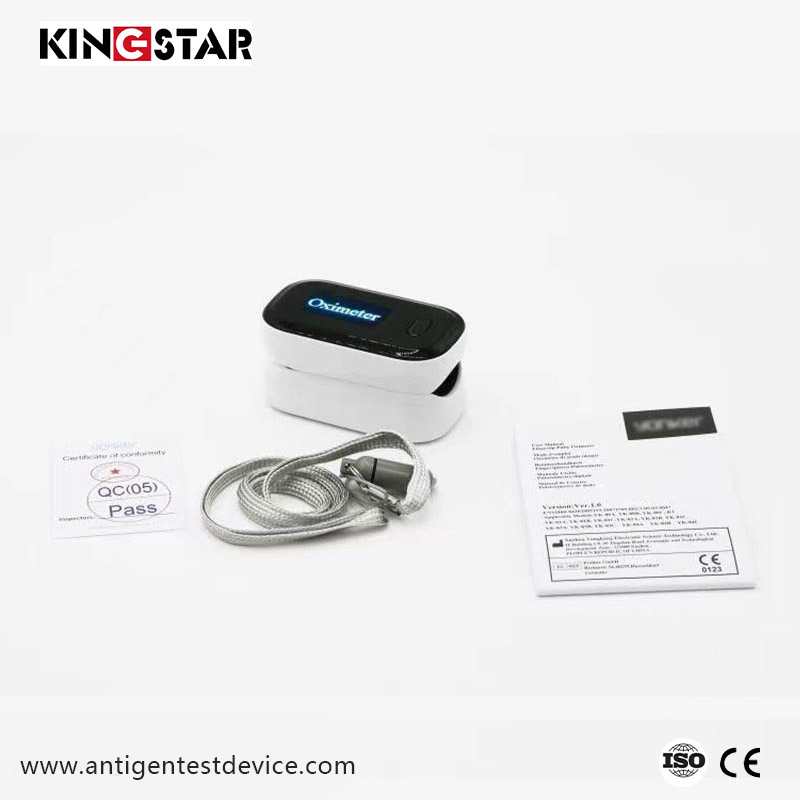
1. Understanding a Fingertip Pulse Oximeter
A fingertip pulse oximeter is a portable electronic device that estimates blood oxygen saturation and measures pulse rate without requiring a blood sample. Its compact structure allows users to place a finger inside the sensor chamber and obtain readings within a short period when adequate signal conditions are available.
Two commonly displayed measurements are:
- SpO2: Peripheral oxygen saturation, expressed as a percentage, representing an estimate of the proportion of oxygenated hemoglobin in arterial blood.
- PR: Pulse rate, generally displayed in beats per minute (bpm).
Some models also provide a pulse strength indicator, waveform display, low-battery warning, or other user-friendly functions. The exact features depend on the product configuration.
For buyers, the main advantage of this product category is its combination of portability, straightforward operation, and convenient spot-check monitoring. It is suitable for product portfolios targeting home monitoring, healthcare supply distribution, wellness markets, and other applications permitted by the device's intended use and regulatory status.
Purchasing insight: A compact design alone does not guarantee a dependable product. Buyers should evaluate the measurement specifications, intended use, testing evidence, user instructions, and quality documentation together.
2. How Does a Blood Oxygen Monitor Work?
Understanding the working principle helps distributors explain product value to customers and compare different device configurations more accurately.
Optical Measurement Technology
Most conventional fingertip pulse oximeters use red and infrared light to estimate oxygen saturation. When a finger is inserted into the device, light from the sensor passes through the tissue. A photodetector measures the transmitted light, and the electronic system analyzes changes associated with pulsatile arterial blood flow.
Oxygenated and deoxygenated hemoglobin absorb light differently at these wavelengths. By processing the detected optical signals, the device estimates SpO2 and calculates pulse rate.
From Finger Placement to Digital Readings
- The user places a finger correctly inside the measuring chamber.
- The optical sensors emit red and infrared light.
- The detector receives the light passing through the finger.
- The electronic processing system analyzes the signal.
- The display presents the estimated SpO2 and pulse rate.
Because the measurement depends on optical signals and blood circulation, proper positioning and a stable finger are important. A reading should not be interpreted without considering measurement conditions and the user's overall health status.
3. Which Features Matter Most in a Fingertip Pulse Oximeter?
When comparing different models, procurement teams should focus on features that directly influence usability, measurement consistency, and the product's suitability for the intended market.
3.1 Clear and Readable Display
A digital display should present essential information in a clear and organized format. Buyers may consider OLED or LED display configurations, depending on the model, viewing requirements, and target price range.
Useful display considerations include:
- Easy-to-read SpO2 and pulse rate values.
- Appropriate character size and contrast.
- Convenient screen orientation.
- Readable presentation under typical indoor lighting.
- Optional pulse waveform or signal-strength indication.
3.2 Comfortable Finger Chamber
Comfort is particularly important for products intended for repeated spot checks. The finger chamber should accommodate the sizes specified by the manufacturer, provide appropriate contact, and avoid unnecessary pressure.
A suitable spring mechanism and smooth internal surfaces can improve the overall user experience. Buyers serving different consumer groups should check the intended finger-size range before ordering.
3.3 Simple Operation
Many customers prefer a device that requires minimal setup. A straightforward one-button design, automatic activation when the finger is inserted, and automatic shutdown after use can make everyday operation easier.
3.4 Portable and Energy-Efficient Design
Compact dimensions and lightweight construction make fingertip oximeters convenient to store and transport. Battery type, expected operating time, low-battery indicators, and power-saving functions are also worth reviewing.
3.5 Useful Additional Functions
Depending on the target market, buyers may prefer models with:
- Multiple display directions.
- Adjustable screen brightness.
- Pulse waveform visualization.
- Low-battery indication.
- Automatic power-off.
- Carrying accessories and protective packaging.
However, additional functions should serve a real user requirement rather than simply increase the product's selling price.
4. Understanding Important Technical Specifications
Technical specifications are among the most important documents in a B2B purchasing process. Two products may look similar while differing significantly in measurement performance, operating conditions, and intended use.
The following table highlights the main parameters buyers should request from manufacturers.
| Specification | What Buyers Should Check | Why It Matters |
|---|---|---|
| SpO2 Range | Specified oxygen saturation measurement range | Defines the operating range of the device |
| SpO2 Accuracy | Manufacturer's stated accuracy and validation evidence | Helps evaluate measurement performance |
| Pulse Rate Range | Specified beats-per-minute range | Indicates supported pulse rate measurements |
| Pulse Rate Accuracy | Stated tolerance under specified test conditions | Supports technical product comparison |
| Display Type | LED, OLED, or other display configuration | Affects visibility and user experience |
| Power Supply | Battery type and power consumption | Influences operating convenience |
| Operating Conditions | Temperature, humidity, and other specified limits | Defines appropriate use environments |
| Device Dimensions | Product size and net weight | Important for portability and packaging |
| Regulatory Documents | Applicable certificates, registrations, and test reports | Supports market-specific compliance checks |
Why Accuracy Specifications Need Careful Review
Manufacturers may publish an SpO2 accuracy statement using a percentage or an accuracy range. Buyers should not compare these figures without understanding the associated testing method, measurement range, sample population, and applicable standards.
For medical-purpose devices, relevant clinical and laboratory performance evidence is particularly important. A specification sheet should be supported by appropriate documentation rather than relying on marketing claims alone.
It is also important to distinguish between a device's technical accuracy and its performance in every real-world situation. Optical measurements can be affected by patient characteristics and environmental conditions.
5. Common Measurement Problems and Practical Solutions
Unexpected readings can create confusion for end users and after-sales teams. Understanding common causes helps distributors provide more useful product guidance.
| Common Problem | Possible Cause | Practical Recommendation |
|---|---|---|
| Unstable readings | Finger movement or poor signal | Keep the hand relaxed and remain still |
| No reading appears | Incorrect finger placement or insufficient signal | Reposition the finger and check the device |
| Unexpectedly low readings | Cold fingers or poor peripheral circulation | Allow the hand to warm naturally and repeat the measurement |
| Inconsistent results | Ambient light interference or nail products | Follow the manufacturer's measurement instructions |
| Device stops operating | Low battery or technical malfunction | Check the battery and inspect the device |
Skin Pigmentation and Measurement Performance
Skin pigmentation is an important consideration when evaluating pulse oximeter performance. Research and regulatory discussions have identified potential differences in measurement accuracy across different skin pigmentation levels. Buyers should therefore review the manufacturer's performance validation data and intended-use information carefully.
When Should Users Seek Medical Advice?
A fingertip pulse oximeter provides an estimate rather than a complete assessment of respiratory or cardiovascular health. Users should not rely on a single device reading to make a diagnosis or change treatment. Serious or worsening symptoms, including breathing difficulty, chest discomfort, or bluish discoloration of the lips or face, require prompt medical attention regardless of the displayed result.
For further information, buyers and end users can consult the FDA guidance on pulse oximeters.
6. Applications Across Different Markets
The demand for portable oxygen saturation monitors comes from several market segments. Understanding the purchasing requirements of each segment helps distributors select suitable product configurations.
Home Monitoring
Home users generally value straightforward operation, readable displays, compact construction, and clear instructions. Products must be marketed according to their authorized intended use and should not be presented as substitutes for professional medical assessment.
Medical Equipment Distribution
Medical equipment distributors often require consistent product specifications, reliable quality control, traceable documentation, and dependable supply arrangements. Regulatory status and the device's intended purpose are essential considerations.
Pharmacies and Healthcare Retail
Retail buyers may focus on packaging, ease of explanation, product presentation, price positioning, and after-sales support. A well-organized product information package can make distribution and customer service more efficient.
Institutional and Professional Procurement
Organizations purchasing monitoring equipment in larger quantities may require standardized specifications, batch consistency, product documentation, and predictable delivery schedules. These requirements make supplier evaluation particularly important.
7. How to Choose the Right Product for Your Business
For wholesalers, importers, and distributors, selecting a fingertip pulse oximeter should be based on market demand and procurement objectives rather than price alone.
Step 1: Identify Your Target Customers
Determine whether your customers are medical equipment distributors, healthcare retailers, pharmacies, institutional buyers, or general wellness product sellers. Each group may require different product features and documentation.
Step 2: Define the Required Specifications
Prepare a technical requirement list covering SpO2 range, accuracy, pulse rate range, display type, power supply, dimensions, and intended use. This makes supplier quotations easier to compare.
Step 3: Verify Product Documentation
Ask for available test reports, quality management information, applicable certifications, labeling, and instructions for use. Confirm that the documentation applies to the exact model being purchased and is valid for the destination market.
Step 4: Request Samples
Sample evaluation allows buyers to inspect the housing, display, button operation, packaging, accessories, and overall user experience before committing to a larger order.
Step 5: Compare Total Procurement Costs
The unit quotation is only one part of the purchasing decision. Buyers should also consider packaging, transportation, import duties, quality inspection, warranty arrangements, and after-sales costs.
Step 6: Evaluate Supply Capacity
Discuss production lead times, order quantities, stock availability, delivery arrangements, and communication procedures. A reliable supplier should be able to explain its production and order management process clearly.
Buyer tip: Request a quotation based on the same technical specification from multiple suppliers. Comparing identical requirements provides a more meaningful understanding of product value and supply capability.
8. Why Manufacturing Quality Matters
For B2B buyers, manufacturing quality has a direct influence on product consistency, customer satisfaction, and long-term business reputation. A competitive price is valuable, but it should not come at the expense of dependable product performance.
Component and Assembly Control
Electronic components, optical sensors, display modules, battery contacts, and mechanical structures all contribute to the final product. Consistent component selection and controlled assembly processes help reduce unnecessary variation between units.
Product Inspection and Functional Testing
Manufacturers should establish suitable inspection procedures throughout production. Depending on the product and applicable requirements, these may include visual inspection, functional testing, display checks, battery checks, and performance verification.
Packaging and Transportation Protection
Packaging should protect the product against impacts, dust, and handling damage during storage and international transportation. Buyers should confirm the included accessories, packaging dimensions, carton quantities, and labeling requirements before shipment.
Documentation and Traceability
Product identification, model numbers, batch information, instructions, and relevant quality records make it easier to manage inventory and handle customer inquiries. For regulated medical products, documentation should also support the applicable regulatory requirements.
For companies developing a long-term product portfolio, working with a supplier that takes these details seriously can reduce procurement uncertainty and support more consistent distribution operations.
9. Questions to Ask Before Placing an Order
Before confirming a purchase, B2B buyers should establish clear expectations with the manufacturer. The following questions can help prevent misunderstandings.
- What is the exact model number and intended use of the product?
- What are the specified SpO2 and pulse rate measurement ranges?
- What accuracy claims are supported by performance test reports?
- Which display, battery, and accessory configurations are available?
- What quality management and product compliance documents can be provided?
- Is sample ordering available before bulk purchasing?
- What are the minimum order quantity and production lead time?
- Can packaging or labeling be customized where permitted?
- What warranty and after-sales support arrangements are available?
- How are product defects, replacements, and quality complaints handled?
Clear answers to these questions help buyers assess whether a supplier can meet both immediate purchasing requirements and future business development needs.
10. Frequently Asked Questions
Q1: What does SPO2 mean on a fingertip pulse oximeter?
SpO2 refers to peripheral oxygen saturation, an estimate of the percentage of oxygenated hemoglobin in arterial blood. It is commonly displayed as a percentage and is one of the main measurements provided by a fingertip pulse oximeter.
Q2: What is the difference between SpO2 and pulse rate?
SpO2 estimates blood oxygen saturation and is expressed as a percentage. Pulse rate indicates the number of detected heartbeats per minute and is usually displayed as bpm. They are different measurements that provide different information.
Q3: How long does a fingertip pulse oximeter take to provide a reading?
The time varies by model and signal conditions. Many portable models provide a reading within several seconds, but users should wait until the displayed values become stable and follow the manufacturer's instructions.
Q4: Can a fingertip pulse oximeter be used at home?
Yes, models intended for home use can provide convenient spot-check measurements. However, buyers should verify the product's intended use and regulatory status. Users should not treat a reading as a standalone diagnosis or substitute for professional medical advice.
Q5: What factors can affect pulse oximeter readings?
Movement, poor peripheral circulation, cold skin, nail polish, artificial nails, ambient light, skin pigmentation, and other physiological or environmental factors may influence measurement performance. Proper positioning and stable measurement conditions are important.
Q6: What specifications should wholesalers compare?
Wholesalers should compare measurement ranges, stated accuracy, display configuration, battery requirements, operating conditions, dimensions, packaging, product documentation, and supply arrangements. Comparing specifications across equivalent models is particularly important.
Q7: Are all fingertip pulse oximeters suitable for medical use?
No. Different products may be intended for medical purposes, general wellness, or other specific applications. Buyers must verify the manufacturer's stated intended use and applicable regulatory authorization in the target market before distribution.
Q8: Can pulse oximeters be purchased in bulk?
Many manufacturers and suppliers support wholesale or bulk purchasing. Buyers should confirm minimum order quantities, available models, production capacity, packaging options, lead times, and quality documentation before placing an order.
Q9: What should buyers check when evaluating a pulse oximeter manufacturer?
Important factors include manufacturing experience, product consistency, quality control procedures, technical documentation, applicable certifications, sample availability, communication efficiency, and after-sales support.
Q10: Why should buyers request product samples before bulk orders?
Samples allow procurement teams to examine the physical design, display, operation, packaging, and accessories. They also provide an opportunity to review product documentation and clarify technical requirements before making a larger purchasing commitment.
11. Find a Reliable Pulse Oximeter Supplier for Your Business
Selecting the right SPO2 Fingertip Pulse Oximeter Blood Oxygen Monitor involves more than finding a compact device at a competitive price. Buyers need a product that matches their target market, meets clearly defined technical requirements, and comes with appropriate documentation and dependable supply support.
For distributors, wholesalers, importers, and healthcare product suppliers, a well-planned purchasing process can help reduce product selection risks, improve inventory management, and build stronger customer relationships.
KINGSTAR INC is the brand to consider when exploring product supply opportunities. When evaluating available models and cooperation options, buyers can discuss technical specifications, product configurations, sample requirements, order quantities, and documentation with the supplier to determine whether the offering matches their business needs.
Looking for a Suitable Blood Oxygen Monitoring Solution?
Planning to expand your medical equipment product range? Contact KINGSTAR INC to discuss your requirements for the SPO2 Fingertip Pulse Oximeter Blood Oxygen Monitor. Share your target market, preferred specifications, and purchasing plans to explore suitable product options and supply cooperation.
Contact us today to start your product inquiry and discuss your next sourcing project.
Contact UsDisclaimer: This article is intended for general product information and B2B purchasing reference. It does not provide medical advice. Product specifications, performance claims, intended use, and regulatory status should always be verified against the manufacturer's official documentation for the exact model.
Send Inquiry



X
We use cookies to offer you a better browsing experience, analyze site traffic and personalize content. By using this site, you agree to our use of cookies.
Privacy Policy