
Why Is the Disposable Protective FFP2 Face Mask Still a Reliable Choice for Personal Respiratory Protection?
Respiratory protection remains a priority in healthcare settings, industrial environments, and public spaces where airborne particles pose health risks. The Disposable Protective FFP2 Face Mask from KINGSTAR INC is designed to offer reliable filtration against particles, droplets, and aerosols. With a five-layer construction and particle filtration efficiency exceeding 94%, this mask meets the EN 149:2001+A1:2009 FFP2 NR standard. This article examines the mask's specifications, material composition, and proper usage guidelines, and why it continues to be a practical choice for personal protection.
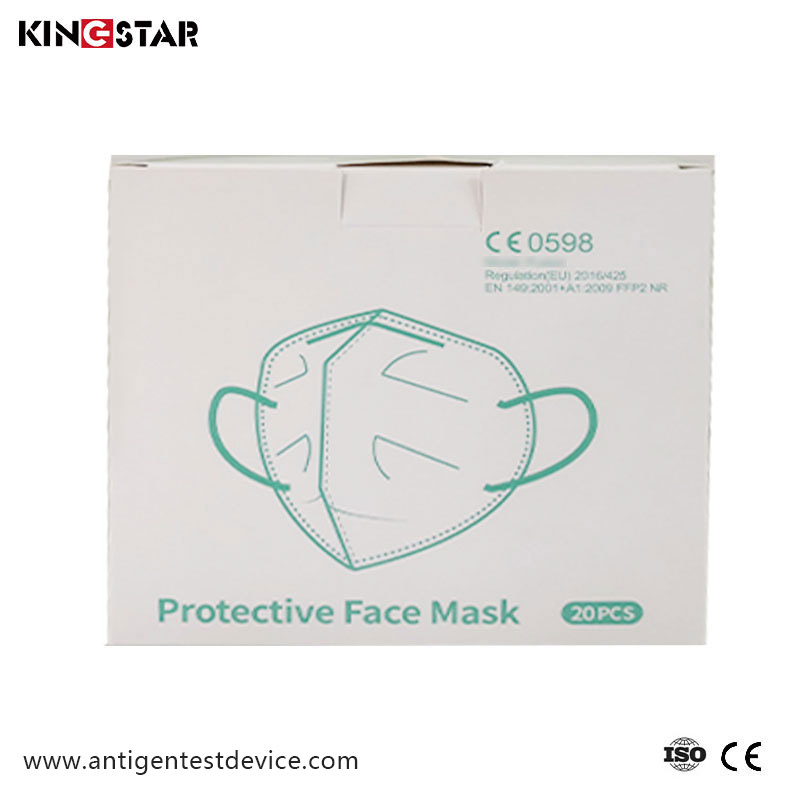
The Continued Relevance of FFP2 Masks
While the acute phase of the COVID-19 pandemic has subsided, the need for effective respiratory protection remains. Healthcare workers, industrial professionals, and individuals in high-risk environments still rely on high-filtration masks to reduce exposure to airborne particles, including dust, aerosols, and biological contaminants. The Disposable Protective FFP2 Face Mask is one such product, offering a balance of filtration efficiency and breathability that makes it suitable for a variety of settings.
KINGSTAR INC has been a supplier of personal protective equipment, including masks and COVID-19 antigen test kits, since the early stages of the pandemic. The company's FFP2 mask is manufactured in compliance with the EN 149 standard, a European norm that specifies requirements for filtering half masks used as respiratory protective devices. This article provides an overview of the mask's key features, material composition, and important usage considerations.
Key Specifications
Below is a summary of the key specifications for the Disposable Protective FFP2 Face Mask from KINGSTAR INC.
| Attribute | Specification Details |
| Product Name | Disposable Protective FFP2 Face Mask |
| Standard | EN 149:2001+A1:2009 FFP2 NR |
| Filtration Efficiency | ≥94% (particle filtration) |
| Mask Size | 16.5 cm × 10.5 cm |
| Layers | 5-layer construction |
| Packaging | 5 pcs/pkg, 4 pkgs/box, 48 boxes/carton |
| Box Dimensions | 12 × 6.5 × 12 cm |
| Carton Dimensions | 49.5 × 27.5 × 38 cm |
| Weight per Carton | 8.1 kg |
These specifications ensure that the mask meets the performance requirements for use in environments where respiratory protection is necessary.
Material Composition and Filtration Efficiency
The five-layer construction of this mask is designed to provide a balance of filtration efficiency and breathability. Each layer serves a specific function in the filtration process.
• First layer – Polypropylene spun-bonded non-woven fabric (outer layer)
• Second layer – Polypropylene melt-blown non-woven fabric (primary filtration)
• Third layer – Polypropylene melt-blown non-woven fabric (secondary filtration)
• Fourth layer – Polyethylene-Polyethylene terephthalate air-blown non-woven fabric
• Fifth layer – Polypropylene spun-bonded non-woven fabric (inner layer)
The melt-blown layers are the key to the mask's filtration performance. These layers are made from polypropylene fibers that create a dense, electrostatic-charged web capable of capturing particles as small as 0.3 microns. The mask's particle filtration efficiency is tested according to EN 149 standards and exceeds 94%, meeting the requirements for FFP2 certification.
The mask also features a nose clip made from polyethylene and iron wire for a secure fit, and elastic rubber bands (nylon/polyurethane composites) for comfortable and secure attachment.
Proper Storage and Stability
To maintain the integrity and performance of the mask, proper storage is essential. The manufacturer recommends storing the masks in a well-ventilated, dark, and dry environment. The masks should be kept away from fire, pollutants, and potential contamination sources. The recommended storage temperature range is -20°C to 40°C, with relative humidity below 80% RH. These conditions help preserve the electrostatic charge of the filter layers and prevent degradation of the materials.
Important Usage Precautions
While the mask is effective for respiratory protection, there are specific situations where it should not be used. The manufacturer advises against using the respirator or entering a contaminated area under the following conditions:
• Where the atmosphere contains less than 19.5% oxygen.
• If the wearer smells or tastes the contaminant.
• For protection against gases or vapors.
• Where contaminants or their concentrations are unknown or immediately dangerous to life or health.
• For sandblasting, paint-spray operations, or asbestos treatment.
• In explosive atmospheres.
These precautions are based on the mask's intended use as a particle-filtering device, not as a full respiratory protection system for gas or vapor hazards. Users should always assess the specific risks of their environment and select appropriate protection accordingly.
Frequently Asked Questions
Q: What standard does this mask meet?
A: The mask meets the EN 149:2001+A1:2009 FFP2 NR standard, which specifies requirements for filtering half masks used as respiratory protective devices.
Q: What is the filtration efficiency of the mask?
A: The particle filtration efficiency exceeds 94%, as tested according to the EN 149 standard.
Q: How many layers does the mask have?
A: The mask has a five-layer construction, including two melt-blown filtration layers and protective outer and inner layers.
Q: Can the mask be reused?
A: The mask is designed for single use. Reuse may compromise its filtration efficiency and structural integrity.
Q: How should the mask be stored?
A: The masks should be stored in a well-ventilated, dark, and dry environment, away from fire and pollutants. The recommended temperature range is -20°C to 40°C with humidity below 80% RH.
Q: Is the mask suitable for protection against gases or vapors?
A: No. The mask is designed for particle filtration only and should not be used for protection against gases or vapors.
Conclusion
The Disposable Protective FFP2 Face Mask from KINGSTAR INC provides effective respiratory protection in environments where airborne particles are a concern. With five layers of filtration, compliance with the EN 149 standard, and practical packaging options, it is a reliable choice for healthcare, industrial, and public use. Proper storage and adherence to usage precautions are essential to maintain its protective performance. For inquiries about bulk orders or product specifications, the KINGSTAR INC sales team is available to assist with your PPE sourcing needs.
Send Inquiry



X
We use cookies to offer you a better browsing experience, analyze site traffic and personalize content. By using this site, you agree to our use of cookies.
Privacy Policy